|
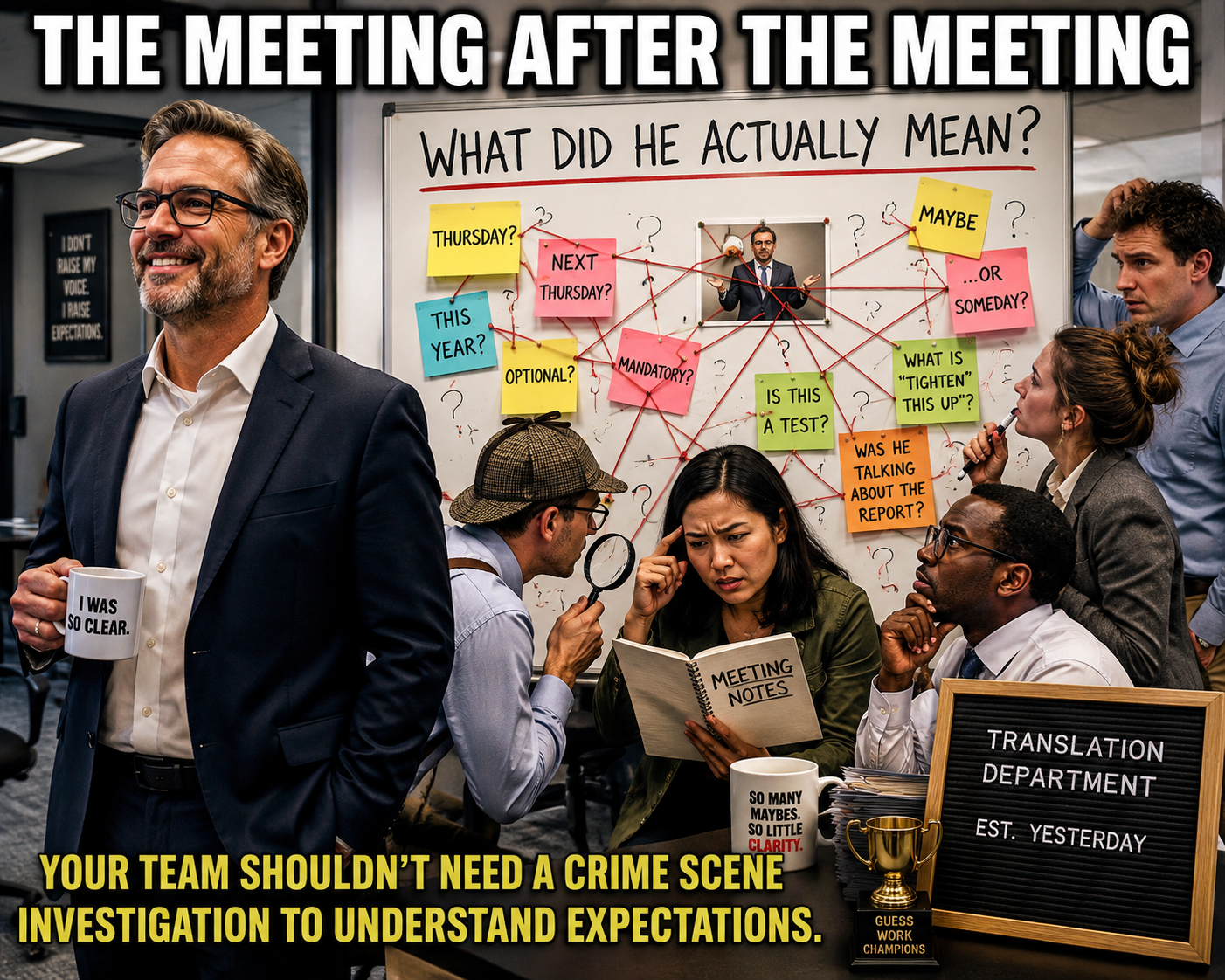
Some leaders come off too aggressive and others focus on being nice. They soften everything, only hint at what they need and hope people pick up the message. They then get disappointed when things don't get done. What makes this frustrating is the fact that many of them genuinely believe they have communicated clearly. When the outcome falls short of what they expected, they immediately assume the issue is the other person’s motivation, accountability, attitude, or effort.
A client I'll call “Fred” came into our coaching session completely exhausted by his team. During our conversations, he kept repeating the same sentence over and over again: "Nobody listens to me anymore." The more he talked, the more convinced he became that his employees were ignoring him, pushing back on him, and choosing their own priorities instead of his. He felt drained, frustrated, and honestly a little defeated. From his perspective, he had already had the conversations, already explained the issues, and addressed the problems.
After listening to several conversations he had with his staff, it became clear that people were listening to him. They just walked away with a very different understanding of what he expected. Fred thought he was being approachable and collaborative, but his team was often left guessing.
When he would ask his team for something it sounded like, "Maybe when you guys get some time, you should probably revisit this issue," or, "I guess we might want to tighten this up a little." His intentions were good, and he wanted people to feel respected, valued, and trusted. He wanted to avoid sounding demanding and believed that softening his language would strengthen relationships. Over time, the gap between what he thought he communicated and what people actually heard grew wider and wider, creating frustration on both sides.
As the resentment grew inside him with every delayed task, every missed expectation, and every lack of follow-through, it felt more and more personal. He began creating stories in his mind about people not caring enough, failing to take ownership, or lacking commitment to the business. The deeper we explored the situation, the more obvious it became that it had very little to do with THEIR effort and much more to do with HIS lack of clarity.
Look, I know it's uncomfy to realize you have to change YOUR behavior. It is far easier to believe people are disengaged, lazy, resistant, or unaccountable than it is to consider that YOUR message itself may be unclear.
During one coaching session, I stopped Fred in the middle of a sentence and asked him to remove all the extra cushioning around his words and simply say what he needed. He paused for a moment. You could tell it felt uncomfortable. Then he gave it a go: "I need this completed by Thursday at noon, and if delays come up, I need communication immediately." There was no anger attached to it, no emotional charge, and no apology for having standards. It was simply clear, respectful, and direct.
Once he got the hang of it, Fred's team transformed. They did not suddenly become smarter, more talented, or more motivated. Nobody attended a special training program and nobody underwent a major transformation. The confusion started disappearing, people moved faster because they understood what they needed to do. It was easier to hold them accountable because they understood what they were committing to. Meetings became shorter and things got done faster as less time was spent trying to interpret what Fred wanted.
Fred's stress level began dropping, he spent less time replaying conversations in his head and less time wondering why people kept missing expectations. He stopped creating stories about who cared and who didn't. He learned that assertiveness does NOT mean becoming louder, harsher, aggressive or more intimidating. That misunderstanding created a damaging cycle where he avoided uncomfortable conversations until frustration manifested into sarcasm, impatience, passive comments, cold behavior, and emotional reactions that left everyone wondering what happened.
Healthy assertiveness looks very different. It is steady, respectful, honest, and clear. It comes from valuing yourself enough to communicate directly while valuing the other person enough to be clear with them.
The strongest communicators I know are usually the clearest., not the loudest. Clarity builds trust, accountability, direction, and respect. Many leaders who believe they have a people problem eventually discover that what they really have is a clarity problem.
|
- STOP being NICE and softening every request with extra words that weaken your message and create confusion around what you actually need.
- START being kind and state expectations directly (and kindly) without apologizing for having standards, timelines, or boundaries.
- START handling conversations while emotions are still manageable instead of letting frustration build to the point where it affects the conversation. Try not to wait more than 24 hours because the stories in our minds get further away from the truth with every passing minute.
|
|
|
|
|

|
|
|
|
|
🧠 Coaching That Doesn’t Just Inform—It Awakens
Ever wonder what it actually feels like to work with me?
|

|
|
|
Click to Buy Now!🎉📚
|
|
|
|
|
The book I had the absolute privilege of co-authoring is also on Amazon, and I couldn’t be more elated to share it with you all! 💫📚
|
|
The Lunar Book is packed with leadership lessons from many voices – a diverse collection of insights and experiences that’ll inspire and elevate your journey. 🌙
|
|
Taming Corporate Beasts is your ultimate guide to conquering big egos and navigating difficult leaders with confidence. 💪
|
Packed with real-life stories of corporate lions 🦁, this book offers powerful strategies to help you lead with authority and ease. 🎯
|
|
|
|
|
|
|
|
|
|
Here’s a fun fact: You CAN find the perfect fit for your team every time with The Predictive Index. Tap the image below to find out more!
|

|
|
|
About Carol:
|

|
|
|
|
|
|
|
|
|
    
|
|
|
|
The Lion Tamer's Court, 16312 Highgate Drive, Riverside, CA 92503
|
|
|
|
|

