
|
One of my clients came into a session looking completely worn down before we even started talking. You could see the pressure really getting to him. Every day at work he felt heavy. Something always went wrong, somebody missed something, communication kept breaking down, and he felt like he was carrying the weight of everybody else’s responsibilities on his back while still trying to keep the business moving forward.
|
He told me he could feel himself changing, and that part bothered him more than anything else. He said he was becoming shorter with people, more irritated in meetings, and emotionally exhausted by the end of the day. Small problems suddenly felt huge, and even at home his mind stayed stuck replaying work situations over and over again. What scared him most was that he truly cared about his team, yet he could feel the tension growing every time he walked into a room.
|
As we talked, it became obvious that his anger kept growing every time he felt unsupported, ignored, or left handling problems that should have been shared across the team. He spent months stuffing the pressure down and trying to “push through it,” but eventually all that frustration started leaking into the way he spoke, reacted, and carried himself around people.
|
A lot of leaders think anger automatically means something is wrong with them, so they spend all their energy trying to avoid the feeling instead of paying attention to what the feeling is trying to say. Anger does not come out of nowhere. It often builds after too much pressure, unclear expectations, weak boundaries, or feeling unheard, overwhelmed, or stretched beyond capacity.
|
I explained to him that anger by itself usually is not the thing destroying relationships at work. Damage starts when people react before slowing themselves down enough to understand what is really happening underneath their emotion.
|
Before our sessions, he replayed conversations in his head all night, venting his frustration to people around him, carrying stress home after work, and walking into conversations while his body still felt completely fired up from the situation before. His shoulders stayed tight, his thoughts raced constantly, his breathing became shallow, and he felt this overwhelming urge to respond immediately anytime conflict showed up.
|
As soon as he started recognizing those patterns, everything slowly began changing. Instead of firing back right away, he started giving himself space before responding to emails, conversations, and stressful situations. People around him felt the difference almost immediately because they stopped bracing themselves for emotional reactions and started feeling safer communicating openly with him again.
|
A few weeks later, one of his employees challenged him publicly during a team meeting. Before, he probably would have reacted out of frustration and shut the person down quickly. This time he stayed calm, kept his tone steady, focused on the actual issue, and handled the conversation without embarrassing the employee in front of everybody else.
|
After the meeting, several people pulled him aside privately and told him they respected the way he handled it because they could feel the difference between somebody reacting emotionally and somebody staying grounded under pressure.
|
Later, he admitted something and it left a mark on my heart. He said for years he believed anger meant he was failing as a leader, when really the emotion was showing him exactly what conversations needed to be had and where accountability was needed. People always remember how a leader handles hard moments. Anybody can stay calm when life is easy. Don't let pressure change how you show up.
|
Most emotional reactions grow from exhaustion, pressure, disappointment, feeling unheard, or carrying too much for too long. Give your body time to settle before difficult conversations. Don’t be like most people who react before they fully process what they’re feeling. Built-up stress, tense muscles, racing thoughts, and emotional overload often push people to react in the moment instead of responding with clarity and intention.
|
|
Focus on solving the actual issue instead of emotionally unloading on people around you. Remember that frustration spreads quickly inside workplaces, homes, and relationships when you forget to pause, assess, and THEN act.
|
|
|
|
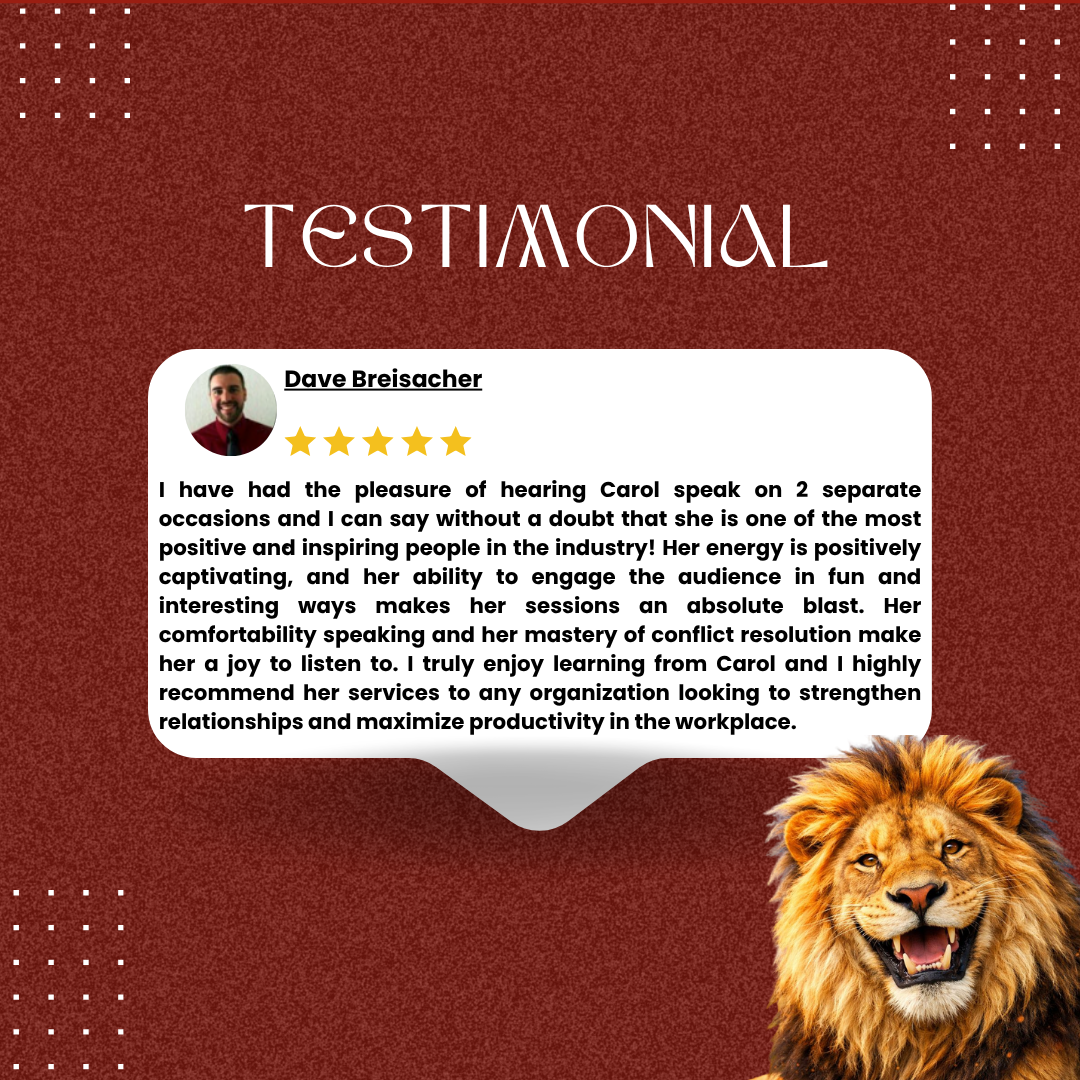
🧠 Coaching That Doesn’t Just Inform—It Awakens
Ever wonder what it actually feels like to work with me?
|
|
|
|
Click to Buy Now!🎉📚
|
|
|
|
|
The book I had the absolute privilege of co-authoring is also on Amazon, and I couldn’t be more elated to share it with you all! 💫📚
|
|
The Lunar Book is packed with leadership lessons from many voices – a diverse collection of insights and experiences that’ll inspire and elevate your journey. 🌙
|
|
Taming Corporate Beasts is your ultimate guide to conquering big egos and navigating difficult leaders with confidence. 💪
|
Packed with real-life stories of corporate lions 🦁, this book offers powerful strategies to help you lead with authority and ease. 🎯
|
|
|
|
|
|
|
|
|
|
Here’s a fun fact: You CAN find the perfect fit for your team every time with The Predictive Index. Tap the image below to find out more!
|

|
|
|
About Carol:
|

|
|
|
|
|
|
|
|
|
    
|
|
|
|
The Lion Tamer's Court, 16312 Highgate Drive, Riverside, CA 92503
|
|
|
|
|

